 Skip to content

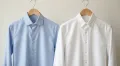
Button Down vs Button Up: What’s the Difference? (A Shirtmaker Explains)
Walk into any menswear store and ask for a “button-down,” and there is a good chance the salesperson will hand you a crisp spread-collar dress shirt. It happens all the time, and it is not really anyone’s fault. The two terms sound like opposites, they get used interchangeably, and most shirts on the rack have buttons running down the front either way.
We make shirts for a living, so we hear this question more than almost any other. Here is the straight answer, plus everything that actually matters when you are deciding which one to wear.
The Short Answer
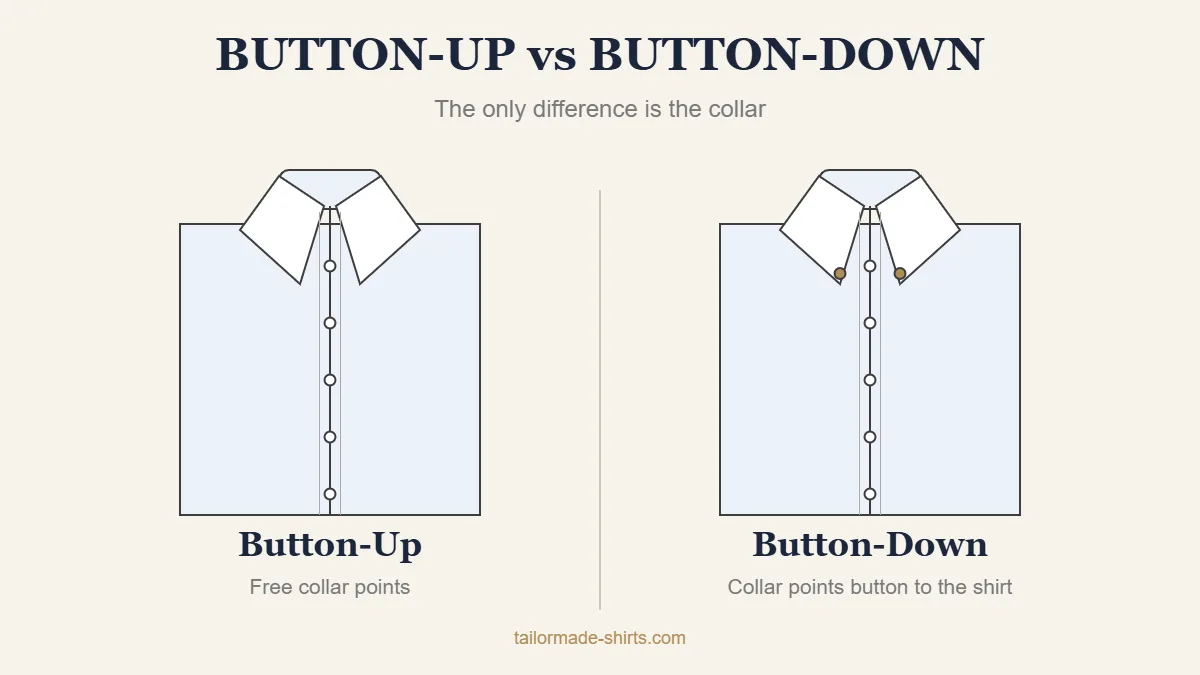
A button-up shirt is any shirt that buttons all the way up the front. A button-down shirt is a button-up shirt with one extra detail: small buttons on the collar points that fasten the collar down to the shirt. So every button-down is a button-up, but most button-ups are not button-downs. The collar is the only thing that separates them, and it also makes the button-down the more casual of the two.
What Is a Button-Up Shirt?
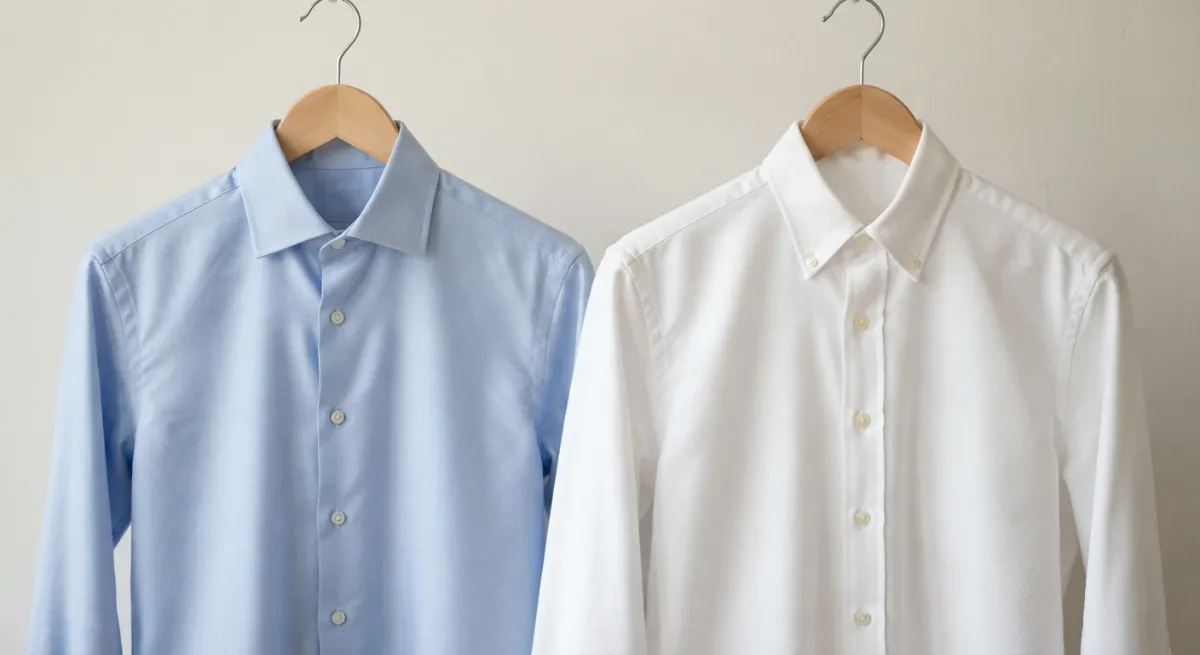
“Button-up” is the umbrella term. If a shirt has a collar and a full row of buttons from the neck to the hem, it is a button-up. That covers your interview shirt, your white wedding shirt, your flannel, your denim shirt and the linen shirt you wear on vacation.
What changes from one button-up to the next is mostly the collar. A button-up can have:
- Point collar: narrow gap between the collar tips. Classic, a little conservative, works with most ties.
- Spread collar: wider gap, made for a fuller tie knot. The default for most modern business shirts.
- Cutaway collar: an extreme spread. Sharp with a suit, and it also looks clean worn open.
- Pin collar: a bar or pin runs under the tie knot and lifts it. Dressy and a bit old-school, in a good way.
- Button-down collar: the one this whole article is about.
In everyday speech, people (including a lot of stylists) use “button-up,” “dress shirt” and “collared shirt” to mean the same thing. That is close enough for most conversations, as long as you remember that a button-up does not automatically have a button-down collar.
What Is a Button-Down Shirt?
A button-down shirt is a button-up with a button-down collar. Each collar point has a small buttonhole, and a matching button sits on the front of the shirt underneath it. Fasten those two buttons and the collar stays put.
Because the collar is held in place by buttons rather than stiff interlining and collar stays, it is usually softer. When you leave the top button open, a good button-down collar rolls into a gentle curve instead of lying flat. That soft roll is what gives the shirt its relaxed, slightly preppy look.
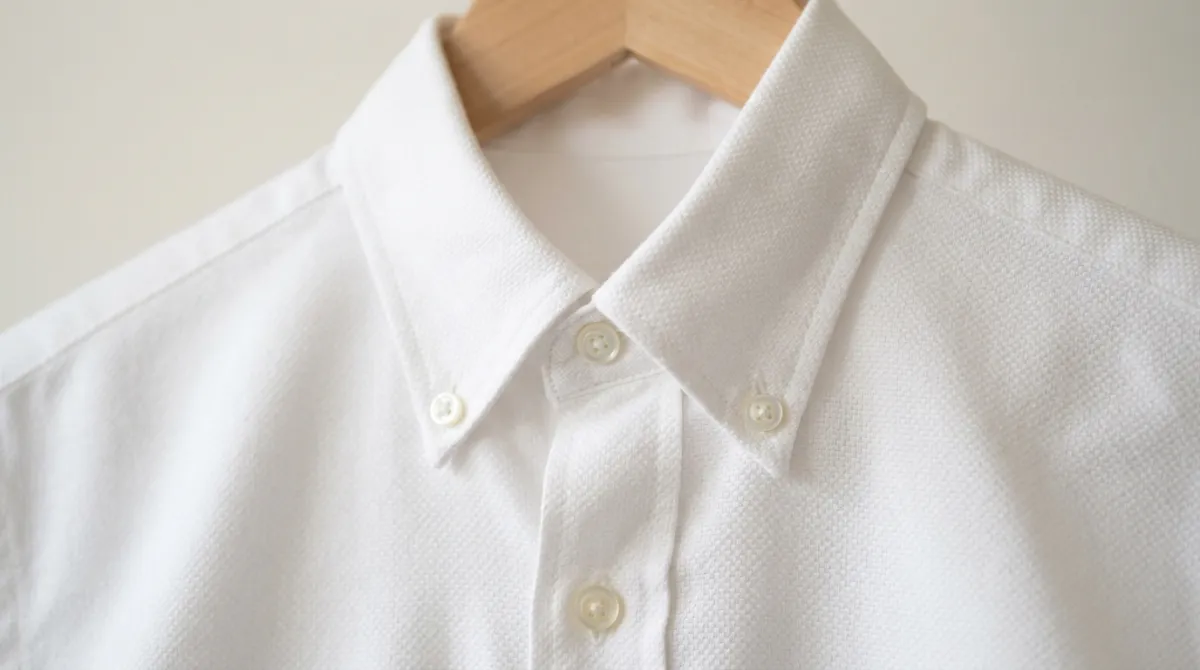
The most famous version is the OCBD, short for Oxford cloth button-down: a button-down collar on a slightly textured, durable Oxford fabric. If you picture a classic Ivy League shirt, this is the one.
Button-Down vs Button-Up: Side-by-Side
| Button-Up Shirt | Button-Down Shirt | |
|---|---|---|
| What it means | Any collared shirt that buttons up the front | A button-up with buttons on the collar points |
| How to spot it | Collar points are free | Two small buttons hold the collar tips down |
| Collar feel | Usually crisp, often with collar stays | Softer, rolls naturally |
| Formality | Casual to very formal (depends on collar and fabric) | Casual to business casual |
| With a tie | Yes, any tie | Yes, but best with knit, wool or casual ties |
| With a suit | The natural choice | Works with relaxed suits, sport coats and blazers |
| Black tie / formal wedding | Yes (with the right collar and cuffs) | No |
| Typical fabrics | Poplin, twill, broadcloth, royal Oxford, linen | Oxford cloth, chambray, linen, flannel |
Why Everyone Mixes Them Up
Part of the blame goes to language. “Button-down” sounds like it describes the front of the shirt, as in buttons going down the placket. It doesn’t. It describes the collar, which buttons down.
The other part is history. The collar started on English polo fields in the late 1800s, where players fastened their collar points so they would not flap in their faces while riding. John E. Brooks, grandson of the Brooks Brothers founder, saw this on a trip to England in 1896 and brought the idea back to New York. Brooks Brothers released its button-down collar shirt around 1900, and it became one of the most copied shirts in American menswear. Sources differ slightly on the exact launch year, but they agree on the polo origin.
Because the button-down became the American shirt for decades, the name drifted. People started calling almost any buttoned shirt a “button-down,” and retailers followed along. The technical meaning never changed, though, and it is the one tailors and shirtmakers still use.
Which Is More Formal?
The button-up, almost always. A button-up with a spread, cutaway or pin collar in a smooth fabric like poplin or twill can go all the way up to black tie, especially with French cuffs. A button-down tops out at business casual and smart casual.
Here is a simple way to think about it, from most formal to most relaxed:
- Button-up, wing or cutaway collar, French cuffs, white poplin or twill (black tie, formal weddings)
- Button-up, spread or point collar, solid or fine stripe (suits, interviews, cocktail attire)
- Button-down in fine Oxford or pinpoint, light blue or white (business casual, semi-formal with a blazer)
- Button-down in chambray, linen, gingham or flannel (weekends, travel, dinners)
- Casual button-ups like camp collars, denim and overshirts (strictly off-duty)
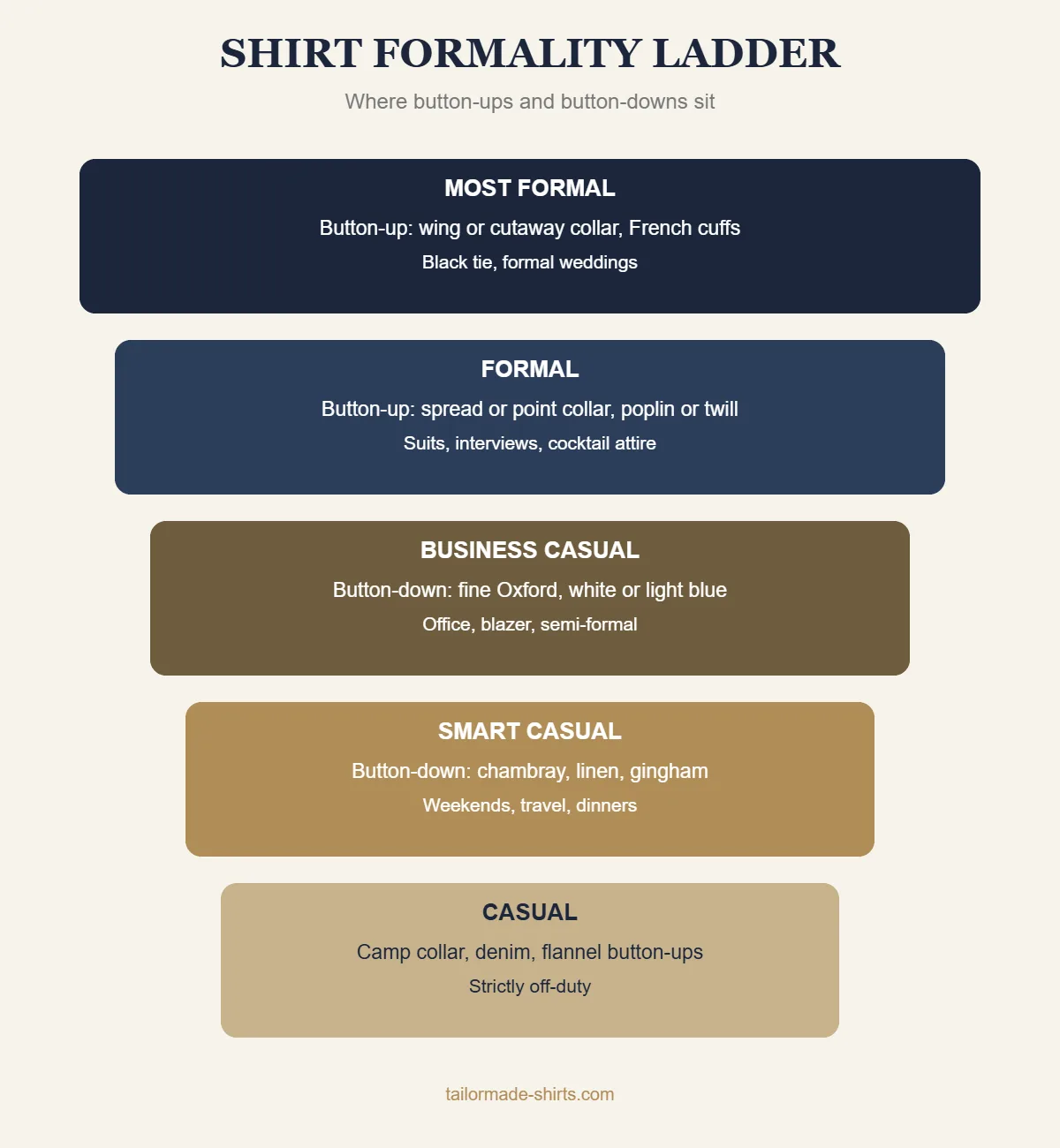
Fabric matters as much as the collar. A spread-collar shirt in rough flannel is still a casual shirt, and a button-down in a fine, smooth fabric can look sharp under a navy blazer.
When to Wear a Button-Up
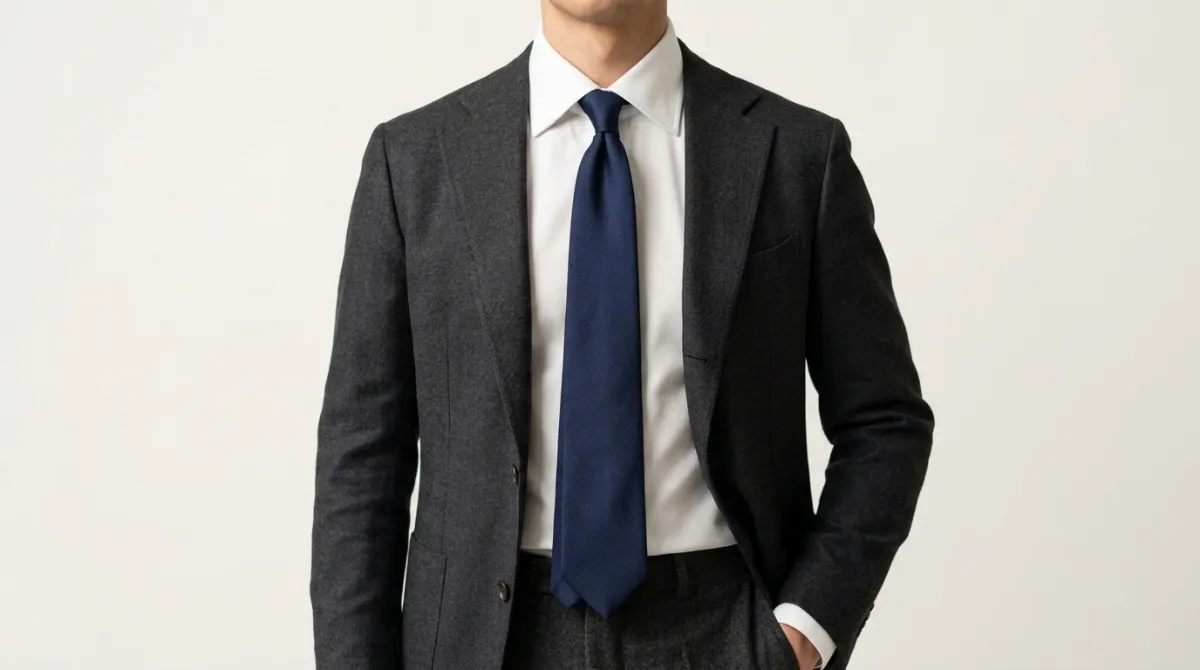
- Any time you wear a full suit and tie. A spread or point collar frames the knot and sits neatly under the jacket lapels.
- Job interviews and client meetings. A white or light blue spread collar is the safest, sharpest choice. Our white shirt style guide covers the details.
- Weddings, galas and evening events. If the invitation says formal, black tie optional or cocktail, go button-up. See our wedding guest dress code guide if you are unsure.
- Black tie. Only a proper tuxedo shirt works here, which is always a button-up.
When to Wear a Button-Down

- Business casual offices. A button-down with chinos or wool trousers is about as reliable as office wear gets. No tie needed.
- With a blazer or sport coat. The soft collar looks great open-necked under a jacket and does not collapse the way a stiff collar without a tie sometimes does.
- Weekends, travel and dinners out. Sleeves rolled, top button open, tucked or untucked depending on the length.
- Daytime and outdoor events. A linen or light Oxford button-down handles heat and movement better than a stiff dress shirt.
Can You Wear a Tie With a Button-Down Shirt?
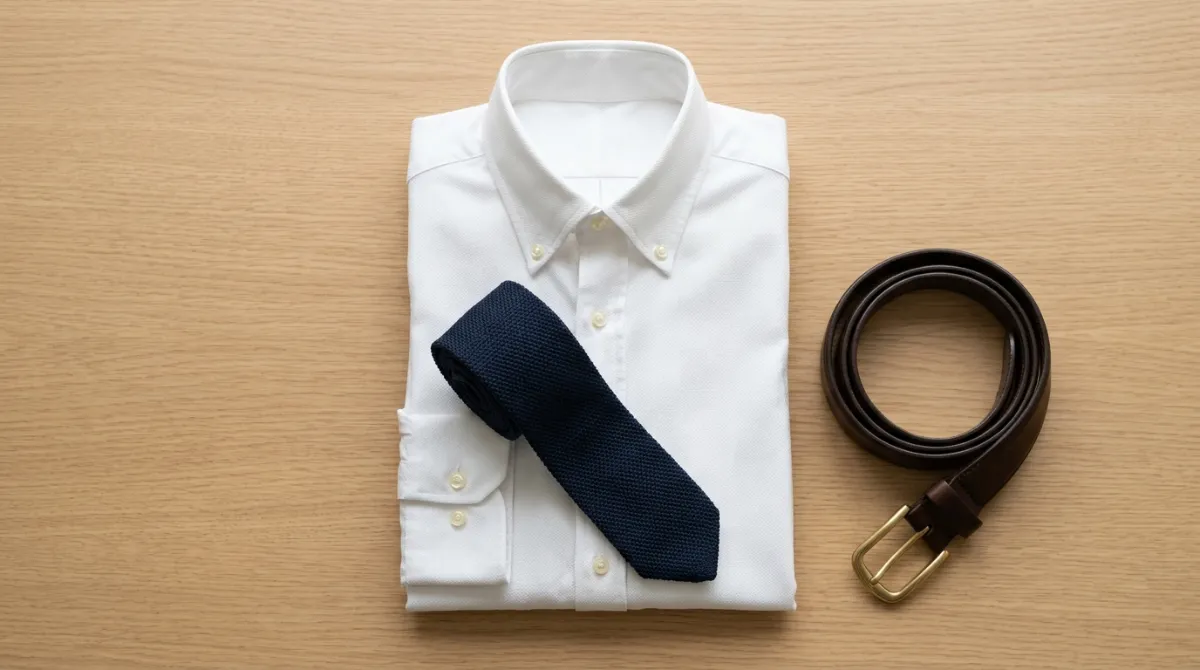
Yes. It is a classic American look, and plenty of well-dressed men have worn it for a century. A few things make it work:
- Always fasten the collar buttons when you wear a tie. An unbuttoned button-down collar with a tie looks unfinished.
- Pick a tie with some texture. Knit silk, wool, grenadine and repp stripes sit naturally with Oxford cloth. A shiny satin tie looks out of place.
- Keep the knot modest. A four-in-hand suits the narrower collar opening. A big Windsor knot crowds it.
- Skip it for formal events. At a formal wedding, black tie event or very conservative office, switch to a button-up with a point or spread collar.
Button-Down vs Button-Up With a Suit
With a sharp business suit, a button-up with a spread or point collar is the better partner. It has the structure to match the jacket, and the collar points tuck neatly under the lapels.
A button-down still works with a suit, but the look shifts. With a soft-shouldered, unstructured suit, a tweed jacket, or a summer cotton suit, an Oxford button-down looks relaxed and intentional. With a sleek navy worsted suit for a board meeting, it can look like you grabbed the wrong shirt.
How to Tell Them Apart in Five Seconds
- Look at the collar tips. See a buttonhole near each point and a small button under it? Button-down.
- No collar buttons? It is a regular button-up. Now check the collar shape (point, spread, cutaway, pin) to judge how formal it is.
- Watch for hidden button-downs. Some shirts have buttons hidden underneath the collar points. They look like a regular point collar but stay in place like a button-down. They count as button-ups in style terms because they look formal.
What About the Top and Bottom Buttons?
Two questions come up right after the button-down one, so here they are.
Should you button the top button? Only when you wear a tie. Without a tie, leave it open. The one exception is a deliberate, fashion-forward buttoned-up look with no tie, which works on some people but is a style choice, not the norm.
Should you button the bottom button? On a shirt, yes, if it is tucked in. The “never button the bottom button” rule is about suit jackets and waistcoats, not shirts. If you wear a shirt untucked and the bottom button sits very low, leaving it open is fine.
Button-Down vs Button-Up for Women
The definitions are exactly the same. A women’s button-up shirt or blouse buttons up the front. It is only a button-down if the collar points button to the shirt. Women’s shirts also traditionally button on the left side, the reverse of men’s, but that has nothing to do with whether a shirt is a button-down or a button-up.
Which One Should You Buy?
If you are building a wardrobe from scratch, you need both. Our honest advice after years of making shirts:
- Start with two button-ups: a white and a light blue with a spread collar. They cover interviews, weddings, suits and most formal events. A pin collar shirt is a great third if you dress up often.
- Add two button-downs: a white and a blue Oxford. These become your everyday shirts for the office, weekends and travel. Our white button-down collar shirt and business casual button-down shirts are good places to start.
- Get the fit right before anything else. A cheap shirt that fits beats an expensive one that billows at the waist. If off-the-rack sizes never quite work for you, a custom-made shirt lets you choose the exact collar, cuffs and measurements. Our guide on how to measure yourself for a custom shirt walks you through it.
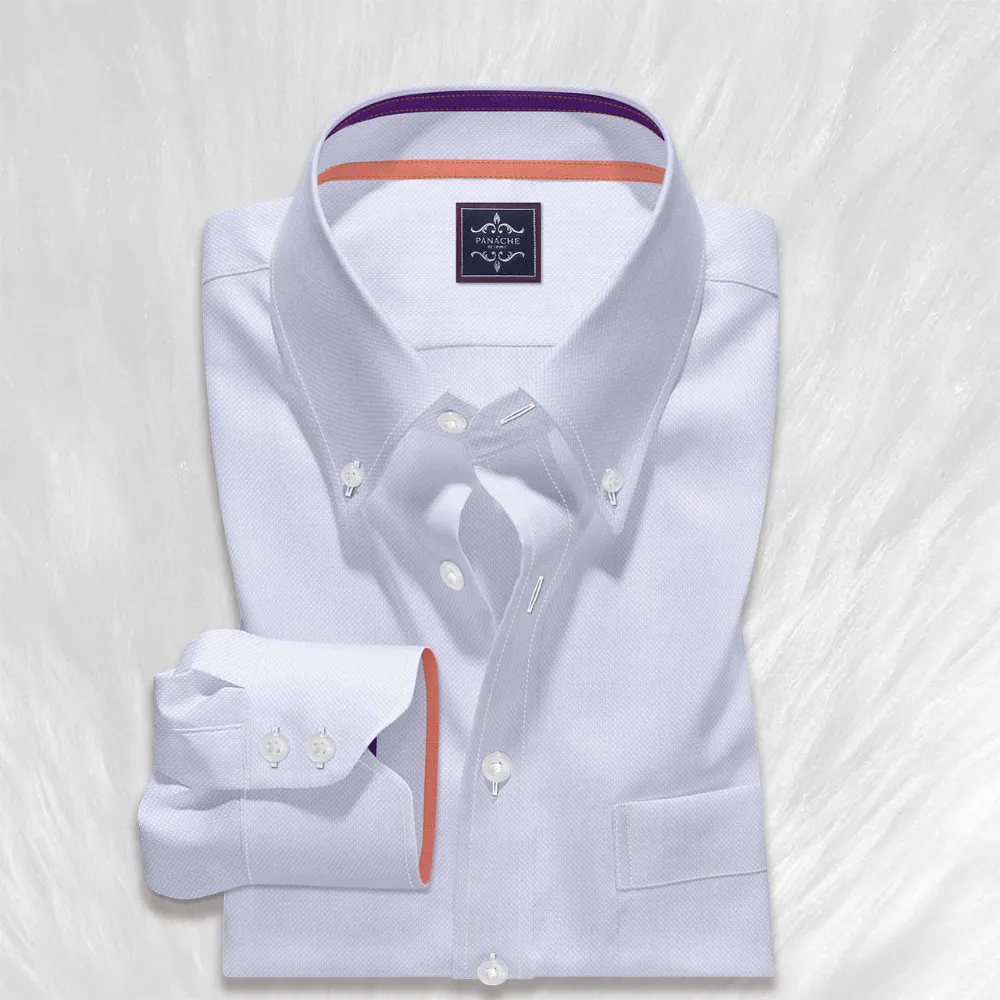
Once you know the difference, you will start noticing collars everywhere, and you will never accept a spread collar when you asked for a button-down again.
Frequently Asked Questions
Is a button-down shirt the same as a button-up shirt?
Not exactly. Every button-down is a button-up, because it buttons up the front. But a button-up is only a button-down if its collar points button down to the shirt.
Is it called a button-up or a button-down?
Both terms are correct for different shirts. Use “button-up” for any shirt with a full button front. Use “button-down” only when the collar has buttons on its points.
Which is more formal, a button-down or a button-up?
A button-up with a point, spread or cutaway collar is more formal. Button-downs are casual to business casual and are not right for black tie or formal weddings.
Can I wear a button-down shirt with a suit?
Yes, especially with relaxed or unstructured suits, tweed and summer cotton suits. For a formal business suit, a spread or point collar button-up looks sharper.
Can you wear a tie with a button-down collar?
Yes. Fasten the collar buttons, choose a textured tie such as knit, wool or repp stripe, and use a small knot like the four-in-hand.
Why is it called a button-down shirt?
Because the collar points button down onto the shirt. The style comes from English polo players who fastened their collars to stop them flapping, and Brooks Brothers made it popular in America around 1900.
What is an OCBD?
OCBD stands for Oxford cloth button-down: a button-down collar shirt made from Oxford fabric. It is the classic casual and business casual shirt in American menswear.
Is a dress shirt a button-up?
Yes. A dress shirt is a button-up, usually with a point, spread, cutaway or pin collar and a crisper fabric. Some dress shirts have button-down collars, but those sit on the casual end of dress shirts.