 Skip to content

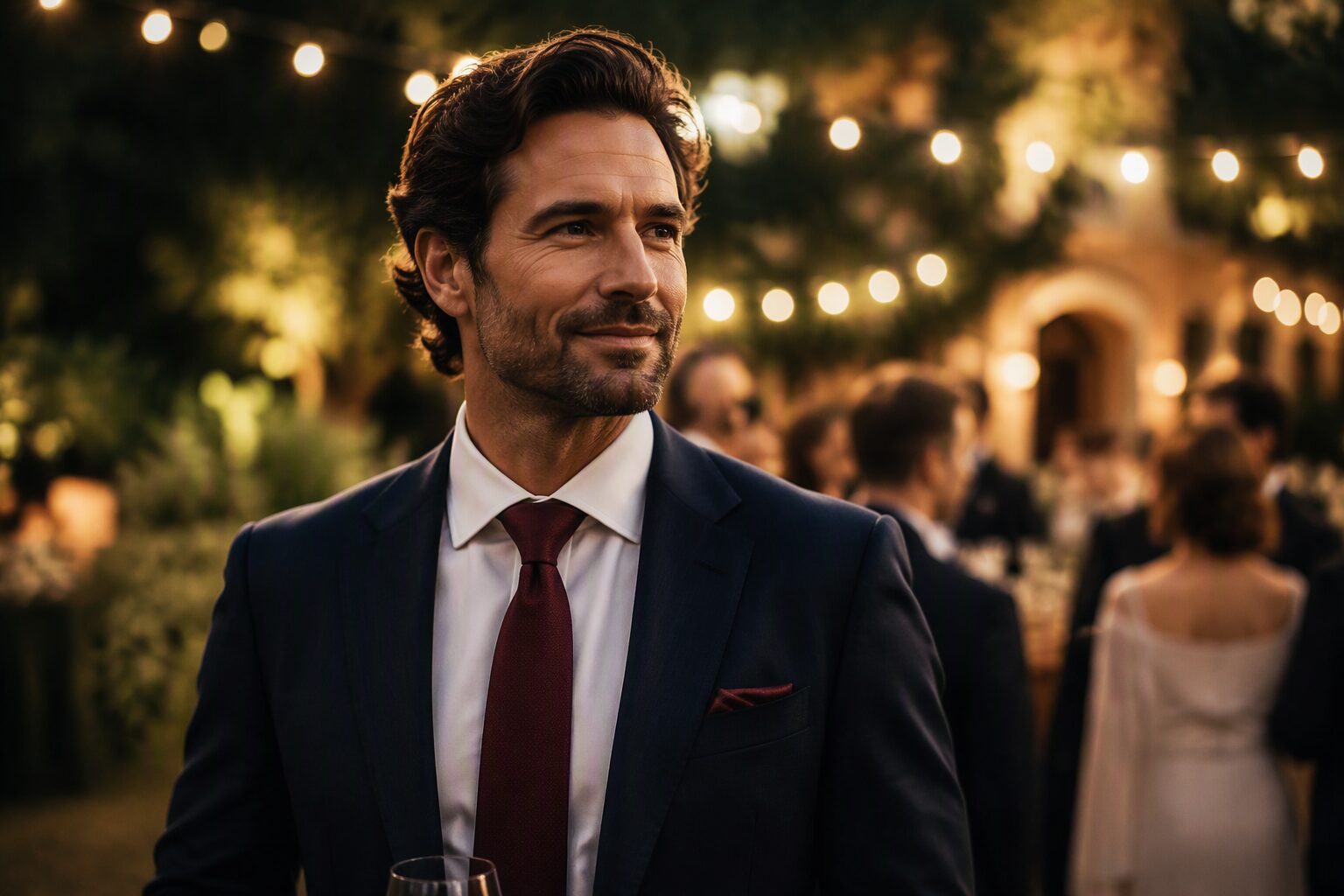
Wedding Guest Dress Codes for Men: What to Wear to Every Type of Wedding
The invitation lands on the fridge. Date, venue, happy couple: all
clear. Then you spot the line at the bottom, “black-tie optional” or
“dressy casual,” and suddenly you’re not sure you own a single
appropriate thing. You are not alone. Dress codes trip up more men than
the gift registry does. Here is what each common code actually means,
decoded from the shirt up.
How to Read the Invitation
The dress code line matters, but the invitation tells you plenty on
its own. Venue, time of day, and season are the three clues worth
reading first. An evening reception at a hotel ballroom leans darker and
more formal. A two o’clock garden ceremony in June leans lighter, in
both color and fabric. Winter weddings call for wool suits and deeper
tones; summer ones reward lighter weaves you can actually breathe
in.
Sometimes there is no dress code at all. Don’t guess. Check the
venue; a country club and a barn suggest very different outfits. Look at
the couple’s wedding website, where dress guidance often hides on the
details page. And if you’re still unsure, ask another guest or a
groomsman. Nobody has ever been offended by that question.
White Tie and Black Tie
These are the strict codes, and you’ll rarely see them.
White tie is the most formal dress code in existence. It means a
black tailcoat, a white piqué dress shirt, a white bow tie (hand-tied,
not pre-tied), and a white waistcoat. There is no creative
interpretation here. If the invitation says white tie, rent or buy
exactly that.
Black tie is the one you’re more likely to meet. It means a tuxedo, a
formal white shirt with a pleated or piqué bib front, a black bow tie,
French cuffs fastened with cufflinks, and patent leather shoes. The
shirt does real work here: the bib front stays visible all night, so it
needs to fit and stay crisp.
One accepted exception: at a summer wedding or a warm-weather
destination, a white dinner jacket with black tuxedo trousers is fine.
Everything else stays the same.

Black-Tie Optional and
Formal
This code confuses more men than any other, but the answer is simple.
A tuxedo is welcome, not required. If you own one and want to wear it,
go ahead; you won’t look out of place.
If you don’t, a dark suit covers it completely. Navy or charcoal, a
clean white dress shirt, and a conservative silk tie in a solid or small
pattern. Dark polished shoes, a matching belt, and you’re done. The
“formal” label you sometimes see instead means the same thing: treat it
like black tie, minus the obligation.
Cocktail Attire
Cocktail is the most common dress code on modern invitations, and the
most misunderstood. It does not mean casual with a nice watch. It means
a suit and tie, full stop.
The good news: cocktail gives you room to show some personality. A
crisp white or light-blue shirt is the no-fail base; it works with every
suit you own and photographs well. From there, bring in color and
pattern through the tie or a pocket square. A burgundy knit tie or a
subtle floral square is where you can have fun without risking
anything.
Time of day still applies. A daytime cocktail wedding welcomes
lighter suits, mid-grey or lighter blue, even tan in summer. An evening
reception shifts darker and more solid: navy or charcoal suit, quieter
tie, polished shoes. When in doubt, go darker. Nobody remembers the
guest who dressed slightly too sharp.
Semi-Formal and Dressy
Casual
Now the tie becomes optional. Semi-formal and dressy casual both mean
a suit, or a blazer with dress pants; think a navy blazer over grey or
stone trousers. The tie can stay home, but only if your collar holds its
own without one. An open collar that collapses looks sloppy fast, so use
collar stays.
Daytime calls for lighter colors and fabrics: a light-blue shirt, a
tan or light-grey suit, brown shoes. Evening pushes you back toward
darker tones. If the wedding sits on the border (a four o’clock ceremony
with an evening reception), dress for the reception.

Casual and Beach Weddings
Casual on a wedding invitation does not mean weekend casual. The
floor is a collared shirt with chinos or dress pants. Anything below
that is a mistake.
Beach ceremonies loosen things further, sensibly. A linen shirt in
white, light blue, or a soft stripe handles the heat and looks right
against sand and water. Loafers or boat shoes replace lace-ups, and no
one expects a tie near the ocean.

Rules That Apply to Every
Wedding
Some lines don’t move, whatever the invitation says. Unless it
explicitly tells you otherwise, jeans, shorts, t-shirts, sneakers, and
flip-flops are off-limits at any wedding. “Casual” describes the
outfit’s formality, not the effort you put into it.
Whatever the code, three rules hold.
First, never outdress the groom or the wedding party. You are a
guest, not the headline act. A guest in a white dinner jacket or an
all-white look commits exactly this sin. Leave statement whites to the
man getting married, and if you are that man, start with our
groom’s wedding shirt guide.
Second, slightly overdressed beats underdressed, every time. A tie
can come off at the reception; you cannot conjure one if the room turns
out more formal than expected.
Third, fit matters more than price. An inexpensive shirt that fits
your shoulders and waist beats an expensive one that balloons when you
tuck it in. A good size guide gets you
most of the way there before you spend anything.
Why a
Made-to-Measure Shirt Works for Wedding Season
If your calendar holds three weddings between May and October, you
don’t need three wardrobes. You need a small bench of shirts that each
cover a dress code, and made-to-measure is the efficient way to build
it.
One custom white poplin shirt carries you from formal through
cocktail; it sits under a tuxedo or a navy suit with equal ease. A
light-blue shirt handles semi-formal and daytime events. A linen shirt
takes care of the beach wedding. Three shirts, every code covered.
The details matter more than most men expect. A spread collar frames
a tie knot properly and suits cocktail and formal wear; a point collar
sits neatly when you skip the tie. French cuffs are the correct call for
black tie. Add a monogram if you like one; skip it if you don’t. The
point of made-to-measure is that you choose the fabric, collar, and
cuffs instead of accepting what a brand decided. You can build each
shirt in the custom shirt
configurator, or browse the semi-formal
shirt range and the wedding
and event shirts for ideas first.
One practical note: made-to-measure takes production time. Order a
few weeks before the wedding, not the week of.
The Bottom Line
Quick recap, one line per code:
- White tie: tailcoat, white piqué shirt, white bow
tie; no improvisation. - Black tie: tuxedo, bib-front shirt, black bow tie,
cufflinks. - Black-tie optional: tuxedo or a dark suit with a
white shirt and tie. - Cocktail: suit and tie; white or light-blue shirt,
personality in the tie. - Semi-formal: suit or blazer, tie optional, collar
stays in. - Casual and beach: collared shirt and chinos at
minimum; linen for the sand.
If you’re in the wedding party rather than just attending, read up on
coordinating
groomsmen shirts and the white
vs ivory vs blue question for the groom. And when you’re ready to
sort your own shirt, start with the build your
wedding shirt. One well-fitting shirt will carry you through the
whole season.